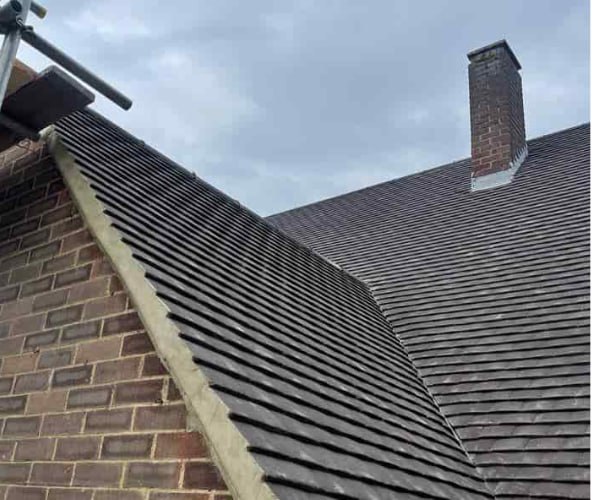
Can Damaged Chimney Flashing Cause a Roof Leak?
A roof leak close to a chimney can be difficult to diagnose because several roofing components meet within a relatively small area. The chimney masonry, surrounding roof covering, mortar and flashing all need to work together to prevent rainwater from entering the property. When one of these elements deteriorates, moisture can find a route beneath the roof covering.
Damaged chimney flashing is one potential cause of this type of leak. Flashing is installed around the junction between the chimney and roof to protect an area where ordinary tiles or slates alone cannot provide complete weather protection. If the flashing becomes loose, damaged or separated from the surrounding materials, water may begin penetrating through the junction.
For homeowners in Askern, South Yorkshire, recognising the signs of flashing deterioration can help ensure that the actual cause of a chimney-related roof leak is addressed rather than repeatedly treating the internal damp mark.
How Damaged Chimney Flashing Can Allow Water Into a Roof
Chimneys create interruptions in an otherwise continuous roof covering. Rainwater travelling down the roof reaches the point where the tiles or slates meet the chimney, making careful detailing around this junction particularly important.
Flashing provides protection at these vulnerable connections. Problems can develop when:
- Sections of flashing become loose or displaced
- Flashing develops splits or other deterioration
- The connection with the chimney becomes compromised
- Surrounding mortar deteriorates
- Gaps form around roof and chimney junctions
- Previous repairs begin to fail
- Nearby tiles or slates become damaged
- More than one defect develops around the chimney
Because several components are positioned closely together, identifying which one is responsible for the leak requires careful inspection.
What Does Chimney Flashing Actually Do?
Roof tiles and slates are highly effective at directing rainfall down a pitched roof, but they cannot simply continue through a chimney.
The junction therefore requires additional protection.
Flashing is carefully fitted around the chimney to help direct water away from the connection between the masonry and roof covering. Different sections work together to prevent rainfall from entering through gaps at these changes in material and direction.
When the flashing remains secure and properly integrated with the surrounding roof, water can continue moving towards the lower sections of the roof.
Once that arrangement is compromised, the junction can become vulnerable to water ingress.
Why Chimney Areas Are Particularly Vulnerable to Leaks
The area around a chimney contains several changes in surface and material.
Instead of rainfall flowing continuously across uninterrupted tiles or slates, it must travel around the chimney structure. Water can collect or become concentrated around certain junctions, particularly during persistent or wind-driven rain.
These areas are also continually exposed to changing weather conditions.
Over time, small weaknesses can develop in flashing, mortar or surrounding roof materials. Once an opening forms, even one that appears relatively minor, repeated rainfall can begin finding its way beneath the external covering.
What Causes Chimney Flashing to Deteriorate?
Flashing can deteriorate for several reasons.
Long-term weather exposure naturally affects roofing materials. Movement between the chimney and roof can also place stress on junctions, while surrounding mortar can gradually lose its integrity.
Strong winds may contribute to already weakened sections becoming displaced.
Previous repair work is another factor worth considering. If an earlier repair addressed only the visible symptom rather than the underlying weakness, the same area can begin leaking again later.
This is why establishing how and where the flashing has failed is more useful than simply applying material over the most obvious gap.
What Are the Signs of a Flashing-Related Roof Leak?
A flashing defect is not always clearly visible from inside the property.
Possible warning signs can include damp staining near the chimney, moisture within the roof space or water marks developing on ceilings or upper walls.
The timing of the leak can also provide useful information.
For example, a problem that becomes noticeable during wind-driven rain may suggest that water is entering through a vulnerable external junction that is particularly exposed under certain weather conditions.
However, these signs cannot confirm flashing damage on their own. The roof needs to be inspected because other chimney and roofing defects can produce similar symptoms.
Water May Not Appear Directly Below the Damage
One of the challenges with diagnosing roof leaks is that the place where water becomes visible internally may not be the location where it entered.
Once rainwater passes beneath the roof covering, it can travel along roofing materials, timbers or other surfaces before reaching the ceiling.
This can create misleading internal staining.
A damp patch close to the chimney certainly makes the chimney area worth investigating, but it should not automatically be assumed that the flashing directly above the stain is responsible.
Tracing the route of the moisture is an important part of professional leak diagnosis.
The Flashing May Not Be the Only Problem
Finding damaged flashing does not necessarily mean that it is the only defect around the chimney.
Surrounding tiles or slates can also be cracked, loose or displaced. Mortar around the chimney may have deteriorated, and other junctions can potentially contribute to water ingress.
A reliable assessment therefore considers the complete chimney area.
Repairing an obvious piece of flashing while overlooking a nearby defect can leave the homeowner with a roof that continues leaking despite having recently received attention.
The objective should be to identify all relevant weaknesses within the affected area.
Mortar Around the Flashing Can Affect Performance
Flashing frequently relies on carefully formed connections with chimney masonry.
If the surrounding mortar deteriorates, gaps can develop where the flashing meets the chimney. The metal itself may remain largely intact while the junction around it becomes vulnerable.
This is an important distinction because replacing otherwise serviceable flashing may not always be the appropriate response.
Professional inspection can determine whether the problem lies with the flashing material, the way it is secured, the surrounding mortar or a combination of factors.
Addressing the actual weakness creates a more targeted repair.
Loose Flashing Can Allow Wind-Driven Rain to Enter
Rain does not always fall vertically.
During windy conditions, water can be driven against chimney sides and into small openings that may receive relatively little moisture during calmer weather.
Loose or lifted flashing can therefore produce an intermittent leak.
A homeowner might notice dampness after particular weather conditions while the roof appears unaffected during lighter rainfall.
Intermittent leaks can be especially difficult to understand because the internal area may dry between periods of rain.
The fact that a leak does not occur every time it rains does not mean the external defect has disappeared.
Small Flashing Defects Can Be Worth Addressing Early
A small separation or loose section of flashing may initially produce little or no visible internal damage.
However, roofing defects rarely improve through continued exposure.
Once water has a route into the roof construction, repeated rainfall can affect materials beyond the original point of entry.
Addressing a localised flashing problem while surrounding materials remain in reasonable condition can help prevent unnecessary deterioration.
Early investigation is therefore worthwhile even where the visible signs appear relatively minor.
Previous Chimney Repairs Can Provide Useful Clues
If a chimney area has leaked before, the repair history can help with diagnosis.
Repeated work around the same junction may indicate that the underlying cause has never been fully identified. Alternatively, an older repair may simply have deteriorated and now require renewed attention.
Knowing what has previously been repaired helps a roofer understand the development of the problem.
A recurring leak should not automatically receive the same treatment again without checking why moisture has returned.
Sometimes a wider assessment reveals a connected defect that was not previously addressed.
Flashing Problems Can Sometimes Be Localised
Damage to chimney flashing does not automatically mean that large areas of the roof require work.
Where the surrounding roof remains sound and the defect is limited to a particular junction, a targeted repair may be appropriate.
The important factor is establishing the extent of deterioration.
A professional roofer can inspect the flashing, chimney junctions and nearby roof covering before deciding how much work is genuinely required.
This avoids unnecessarily disturbing sound roofing materials while ensuring that the affected section receives sufficient attention.
When Might More Extensive Work Be Needed?
More substantial work can become relevant where deterioration affects several parts of the chimney junction.
Multiple loose sections, widespread mortar deterioration, damaged surrounding roof coverings or evidence of repeated unsuccessful repairs can indicate that treating one small point may not be enough.
In these circumstances, the complete chimney detail may need closer attention.
The decision should be based on the condition discovered during inspection rather than simply on the size of the internal water stain.
A small stain can occasionally result from a more significant external weakness, while a visibly concerning area may sometimes have a relatively straightforward cause.
Why Temporary Patching May Not Solve the Leak
Applying a surface patch to a suspected gap can appear to offer a quick solution.
The difficulty is that it may cover the visible defect without establishing where water is actually entering.
If movement, deteriorated mortar or another nearby weakness remains, the leak can return. Water may also find another route around a superficial repair.
Effective roof repairs are based on diagnosis first.
Once the source and extent of the problem are understood, the appropriate materials and repair method can be selected for the affected junction.
Internal Stains Should Not Be the Only Guide
Homeowners often become aware of flashing problems because a ceiling or wall develops staining.
While these marks are useful warning signs, they do not provide a complete picture of the roof’s condition.
The internal finish may remain stained even after the external problem has been repaired, while an active leak can sometimes exist before significant staining becomes visible.
Assessing the external roof and accessible roof space provides more useful information about whether moisture is still entering.
This helps separate evidence of an old leak from signs of a current defect.
Why Professional Leak Diagnosis Matters
Chimney leaks are a good example of why identifying the source of water ingress is often more important than simply repairing the most obvious component.
Several materials meet around a chimney, and each can potentially contribute to the problem.
A professional assessment can examine the flashing, surrounding tiles or slates, mortar and other nearby junctions while considering where water is appearing internally.
This root-cause approach reduces the likelihood of repairing the wrong area.
The aim is to restore the vulnerable junction rather than repeatedly treating symptoms as they appear.
Chimney Flashing Repairs in Askern, South Yorkshire
For homeowners in Askern, South Yorkshire, dampness appearing around a chimney should be investigated rather than assumed to have one particular cause.
At KAM Roofing Askern, we can assess chimney flashing and the surrounding roof area to identify where water is entering and determine whether the problem is localised or connected with other deterioration.
Where damaged flashing is responsible, the repair can be focused on restoring the affected junction and ensuring it works correctly with the surrounding roof covering. Where another defect is contributing to the leak, this can be identified as part of the same assessment.
Conclusion
Yes, damaged chimney flashing can cause a roof leak. Flashing protects the vulnerable junction where the chimney meets the roof, and loose, damaged or poorly sealed sections can provide a route for rainwater to enter beneath the roof covering.
However, dampness near a chimney does not prove that flashing is the only problem. Surrounding tiles or slates, mortar and other chimney details can create similar symptoms, while water can travel before becoming visible inside the property.
The most reliable approach is therefore to identify the source of the leak before deciding on the repair.
If you have noticed signs of water ingress around a chimney at your property in Askern, South Yorkshire, contact KAM Roofing Askern. We can assess the affected roof area and recommend an appropriate repair based on the actual cause and extent of the problem.
Call us on: 01302 496 292
Click here to find out more about KAM Roofing Askern
Click here to complete our contact form and see how we can help with your roofing needs.