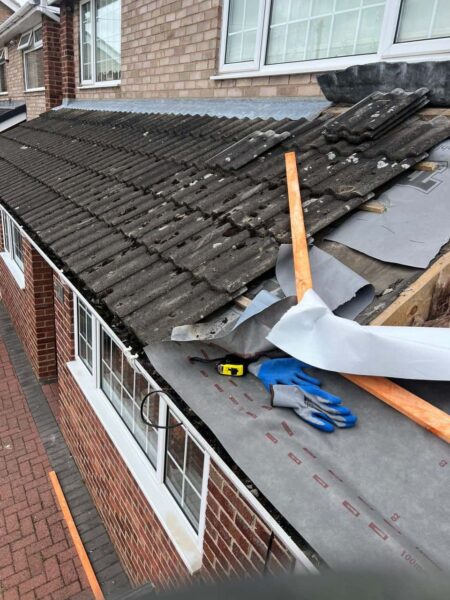
What Counts as a Roofing Emergency?
Some roof defects can be inspected and repaired through a planned appointment, while others require urgent attention to protect the property and its occupants. The difference usually depends on whether water is actively entering, materials are unstable or the roof has suffered sudden, extensive damage.
A roofing emergency does not always involve a collapsed roof or a large opening. A displaced tile, failed section of flashing or split flat roof covering may also require an urgent response when it exposes the building to continuing water ingress.
Roofing Problems That May Require Emergency Attention
Active Water Entering Occupied Rooms
Water dripping through a ceiling or running down an internal wall indicates that the roof’s weatherproofing has been breached. The visible leak may be some distance from the original defect because moisture can travel along underlay, timbers and other surfaces.
Urgent attention is particularly important when water is spreading, affecting several rooms or causing part of a ceiling to bulge. The immediate aim is to identify the entry point and limit further penetration before a lasting repair is completed.
Significant Storm Damage
Strong winds can lift tiles, dislodge ridge materials, damage flashings and tear sections of flat roofing. The full extent of the problem may not be visible from ground level.
A roof may require emergency assistance when severe weather has:
- Removed several tiles or slates
- Exposed the underlay or roof structure
- Displaced ridge, hip or verge materials
- Damaged a chimney or surrounding leadwork
- Torn or lifted a flat roof covering
- Caused debris to strike the roof
- Left roofing materials loose above access areas
Loose components should be assessed promptly because further movement may enlarge the exposed area.
Unstable or Falling Roofing Materials
Tiles, slates, mortar and sections of flashing can become unstable following deterioration or sudden weather damage. Materials that have already fallen may indicate that other nearby components are also insecure.
People should avoid standing beneath the affected area or attempting to retrieve loose materials from the roof. A professional roofer can examine the surrounding covering and determine how much needs to be secured or replaced.
A Large Opening in the Roof
An opening caused by missing materials, impact damage or structural movement can allow substantial amounts of rain into the building. Underlay may provide limited protection, but it should not be relied upon as the main defence against prolonged exposure.
Emergency work may involve making the area temporarily weather-resistant before suitable permanent repairs can be carried out. The appropriate approach depends on the roof type, access conditions and extent of the damage.
A Sagging Roof or Ceiling
A sudden change in the roofline may indicate movement within the supporting structure. Internally, a ceiling that becomes bowed, swollen or heavily stained may be retaining water.
These signs should not be ignored. People should remain clear of the affected area and arrange professional assistance rather than pressing, puncturing or disturbing the surface.
Sudden Failure Around a Chimney or Junction
Chimneys, valleys, abutments and changes between roof sections are common points of water entry. If flashing becomes detached or a valley fails during heavy rain, the resulting leak can be substantial.
Urgent assessment is appropriate when water ingress begins suddenly around one of these details, particularly if it is continuing despite the rain easing. Effective repair must address the failed junction rather than only the internal location where damp appears.
Serious Flat Roof Damage
Flat roofs can develop splits, lifted seams, punctures or detached edges. Ponding water may then find its way through even a relatively small defect.
Emergency attention may be necessary when the covering has peeled back, water is entering rapidly or the deck appears unusually soft or distorted. Walking across a damaged flat roof should be avoided, as the surface may not be stable.
What Should You Do When a Roof Emergency Occurs?
The priority should be to keep people away from areas beneath loose external materials or visibly affected ceilings. Move belongings from the path of incoming water where this can be done safely and use containers to catch drips.
Do not climb onto the roof or attempt repairs from a ladder during rain, strong winds or darkness. Photographs taken safely from ground level or inside the property may help show the condition, but personal safety should remain the priority.
When contacting a roofer, explain:
- Where water or damage is visible
- When the problem began
- Whether the condition is becoming worse
- Which type of roof is affected
- Whether any materials have fallen
- Whether a ceiling or roof section appears distorted
Clear information helps the contractor understand the urgency and prepare for the likely circumstances.
Does Every Roof Defect Require an Emergency Visit?
Not every damaged tile, small stain or worn detail requires an immediate emergency response. However, apparently minor defects should still be inspected before they develop into active leaks.
A problem is more likely to be urgent when the roof is open to the weather, water is entering continuously, materials are unstable or part of the structure has moved. If the severity cannot be judged safely from the ground, professional advice is the sensible next step.
Conclusion
A roofing emergency generally involves active water ingress, unstable materials, serious storm damage, structural movement or a substantial loss of weather protection. Prompt professional attention can help contain the problem, secure vulnerable areas and establish what permanent repairs are needed.
KAM Roofing Askern provides professional roofing assistance in Askern, South Yorkshire. If your roof has suffered sudden damage or water is entering your property, contact our team to arrange an assessment and determine the appropriate response.
Call us on: 01302 496 292
Click here to find out more about KAM Roofing Askern
Click here to complete our contact form and see how we can help with your roofing needs.